

Industry Solutions
AI in Retail: How Artificial Intelligence Is Reshaping the Shopping Experience
What Is AI's Role in Retail?
Artificial intelligence is fundamentally reshaping the retail industry, changing how customers discover products, how retailers operate, and where profit is created. This is not a story about plugging a chatbot into an existing website. BCG puts it starkly. The winners over the next five years will rebuild their value proposition, economics, skills, and tech stack around AI. Retailers that treat it as one more tool will fall behind.
AI in retail means using machine learning, predictive analytics, and generative AI across the everyday jobs of the business. That covers recommendations, demand forecasting, stock, pricing, and customer service. Rather than simply automating existing processes, AI is changing the underlying structure of how retail businesses create and capture value.
Why Retail Is Being Reshaped, Not Just Automated
BCG's 2026 analysis names four parts of retail that AI is reshaping. Reading them changes how you should think about strategy.
- Customer journeys. Shopping is shifting from browsing products to shopping for a mission. The customer wants help refreshing a wardrobe or planning a birthday party, not one item from a search box.
- Channels. Channels are splitting into two roles: research and confirmation. AI assistants are where customers research and build a shortlist. Stores are where they go for confidence, service, and fulfilment.
- Profit pools. Profit is splitting unevenly. Destination retailers, the ones customers come to directly, hold healthier margins. Evaluation retailers, who live on traffic from AI platforms, face growing pressure.
- Differentiation. Differentiation is moving up the stack. Algorithms have standardized promotions, replenishment, and forecasting. What is left to compete on is a distinctive offer and the human judgment layered on top.
Why AI Adoption Is Accelerating Now
KPMG's global research finds leading retailers well past the pilot stage. They already run AI for instant stock replenishment and personalized shopping agents as ordinary operations. The report is blunt about where change starts: with the consumer, not the technology. It then sets out how to prepare for agentic AI in retail operations.
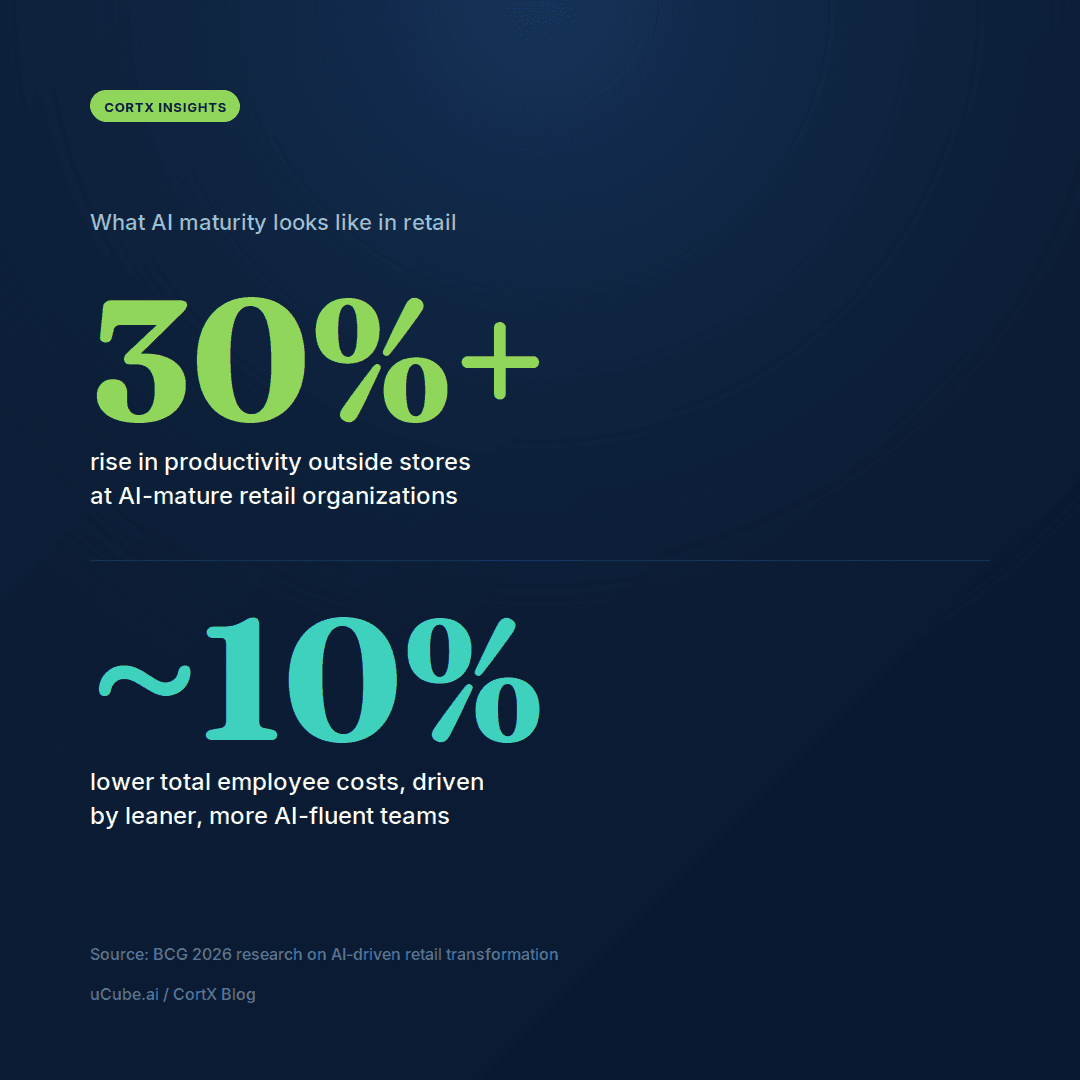
BCG's research adds a workforce dimension to this shift. In AI-mature retailers, productivity outside stores is expected to rise by more than 30 percent. Total employee costs fall by around 10 percent. The driver is leaner teams with deeper analytical and AI skills. This does not mean fewer opportunities in retail, but it does mean the nature of retail roles is changing quickly.
AI Use Cases in Retail: A Deeper Look
AI is already reshaping tasks across the retail value chain, from product discovery and pricing to merchandising and supply chain operations.
1. Personalized Product Discovery
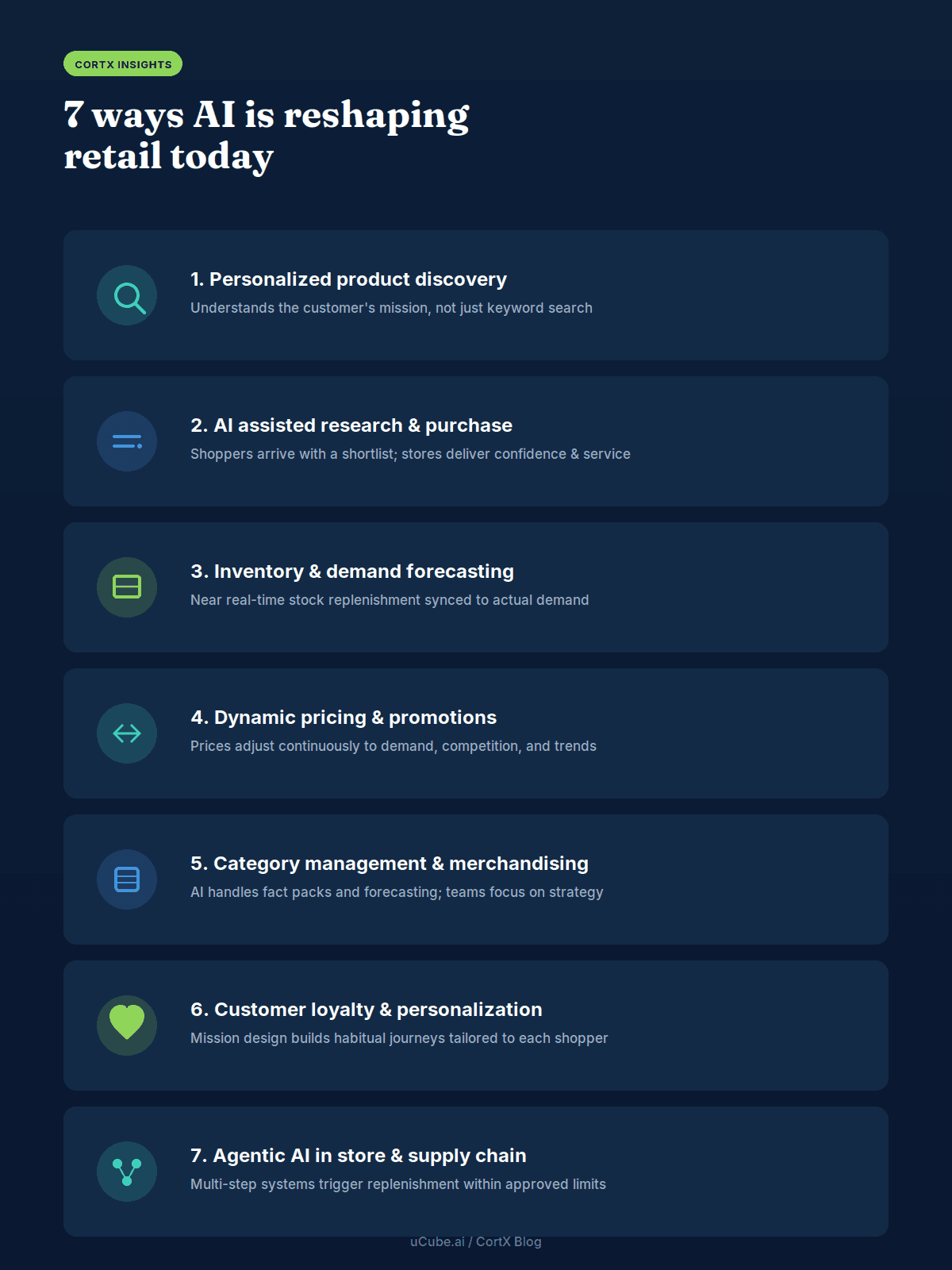
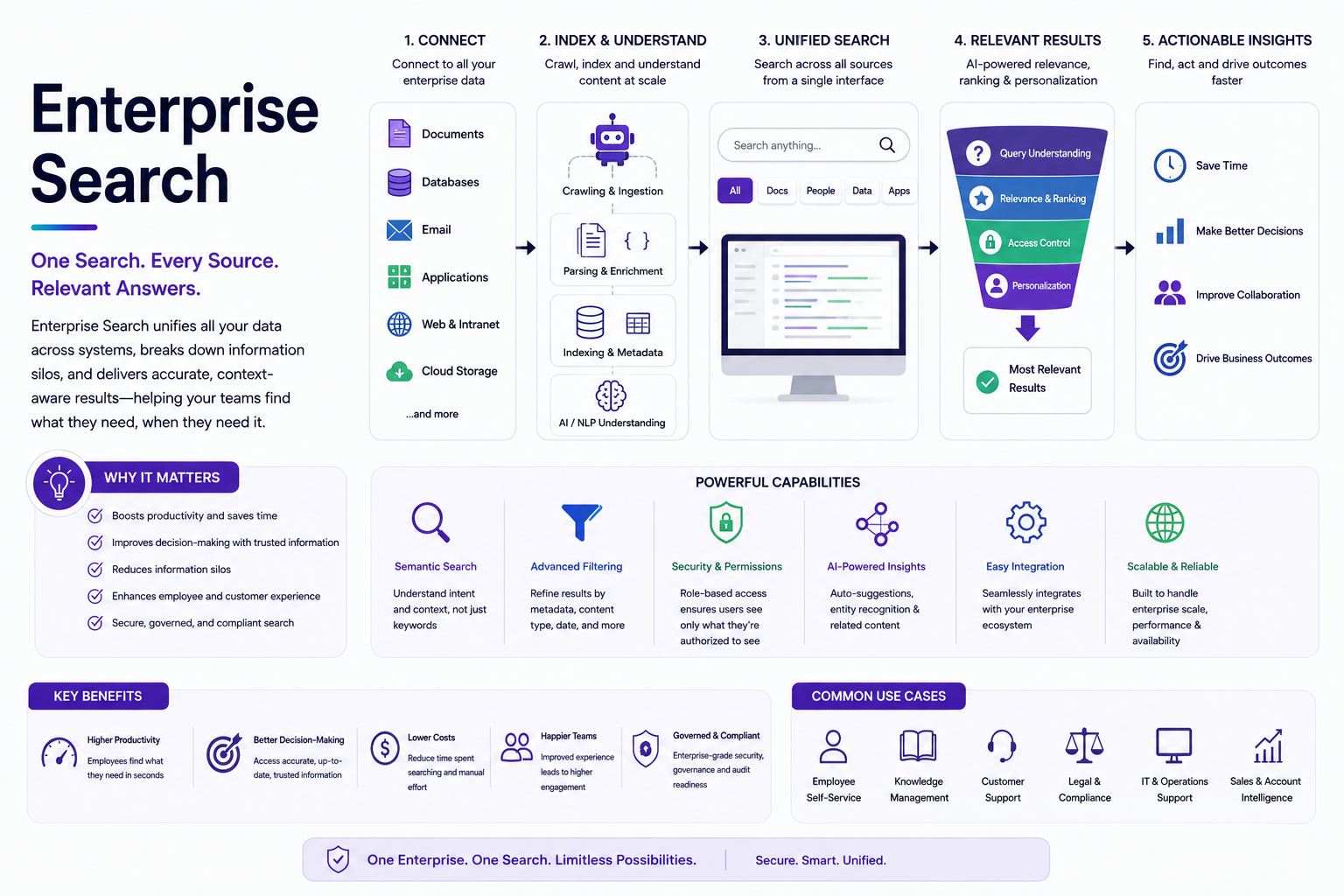
Traditional retail search relies on customers knowing roughly what they want and searching for it directly. AI-powered discovery reads the customer's broader intent instead, known as a mission. Outfits for a beach holiday, or supplies for a home renovation. It then pulls relevant products from every category at once.
So retailers have to think past the individual product listing. Design around the goal the customer is chasing. That is a different craft from traditional merchandising and search.
2. AI Assisted Research and Purchase Decisions
Most customers now research bigger purchases through AI assistants first. They arrive at the store with a shortlist already made. This changes what stores need to deliver. Store staff are no longer helping people browse from scratch. The job is confidence, expert service, and fast fulfilment on a decision already made.
Retailers who see this coming are investing in AI-driven scheduling and task automation for store staff. That buys back time for advice, problem solving, and loyalty rather than routine work.
3. Inventory Management and Demand Forecasting
Holding the right stock without overstocking is one of retail's oldest problems. AI has made the forecasting sharply more accurate. The models read past sales, current market conditions, and emerging trends. Stock levels then track real demand, which cuts waste and lifts margin.
KPMG calls instant stock replenishment one of the clearest cases of AI paying off day to day. Retailers react to demand signals in near real time instead of waiting for the next manual review.
4. Dynamic Pricing and Promotions
Retail pricing has traditionally relied on periodic manual reviews of competitor pricing and internal costs. AI now watches market trends, shopper behavior, competitor pricing, and swings in demand without pause. Prices and promotions move far faster than any manual process allows.
BCG names AI-driven pricing and markdowns as a use case to scale first. It shows measurable value quickly, which builds internal confidence for everything that follows.
5. Category Management and Merchandising
BCG describes category managers turning into mini CEOs of their categories. AI takes the time sinks: vendor negotiation fact packs, competitive monitoring, and demand forecasting. This frees merchandising teams to focus on strategic decisions about assortment and category performance rather than manual data gathering.
That reshapes the merchandising career itself. More time on judgment and strategy, less on repetitive analysis.
6. Customer Loyalty and Personalization
AI analyzes customer browsing patterns and purchase histories to build personalized shopping experiences that go beyond simple product recommendations. BCG calls this mission design. Retailers build loyalty nudges and habitual journeys around each customer's behavior, then use predictive signals to upsell and cross-sell inside the mission.
Personalization of this kind builds a direct relationship with the customer. That is what keeps a retailer a destination, on healthier margins, instead of a business living on referred traffic.
7. Agentic AI in Store and Supply Chain Operations
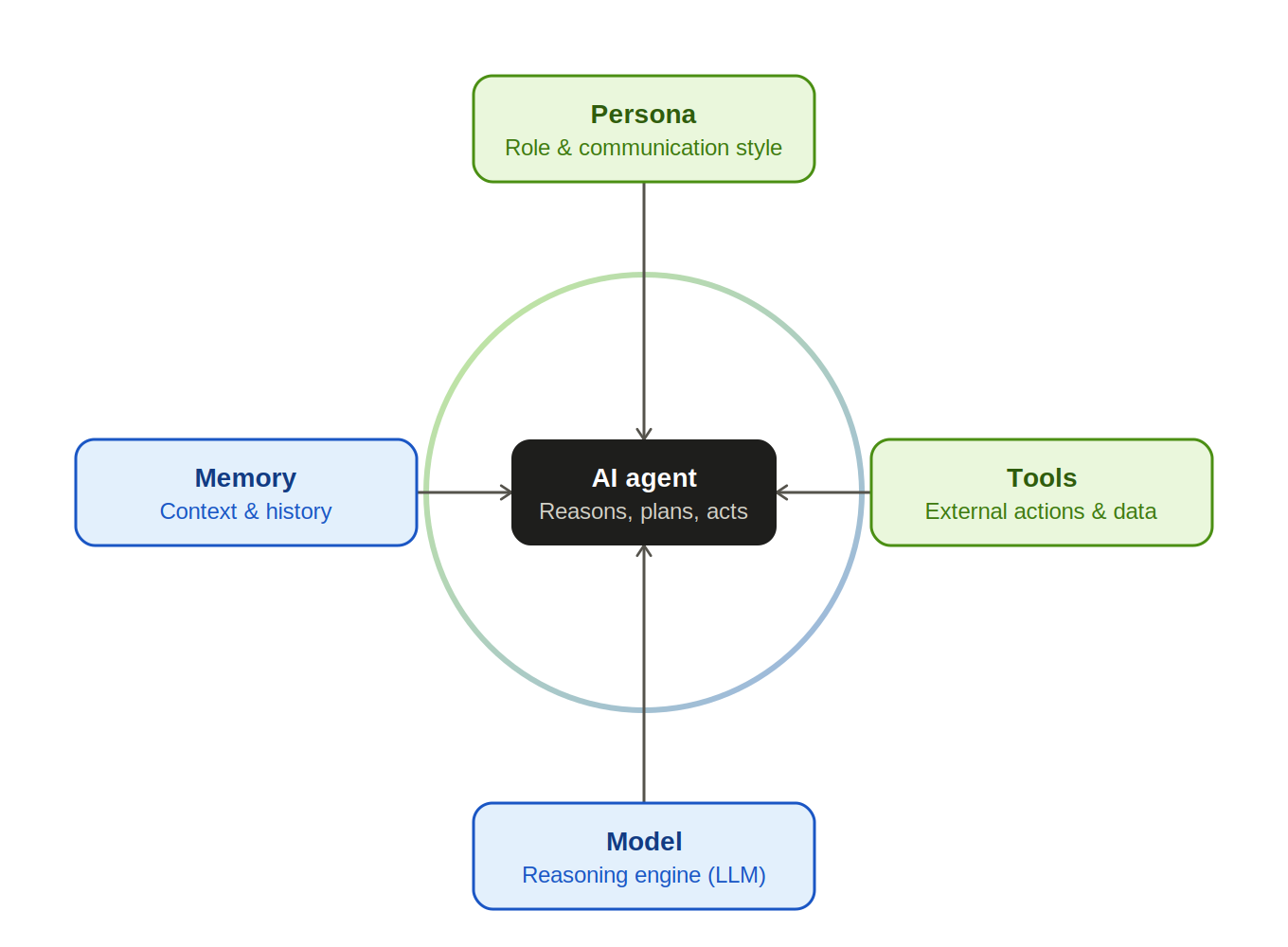
The next wave moves past simple automation into agentic systems. These take multi-step actions under human oversight. One agent might watch inventory across the supply chain and raise replenishment orders within limits you set. KPMG puts preparing for agentic AI high on the leadership list. These systems are a step change from earlier retail analytics tools, not an upgrade to them.
Challenges and Risks of AI in Retail
Every credible discussion of retail AI needs to address its limitations. A few risks are worth planning for before adoption.
- Data quality. This is still the foundation. BCG finds most retailers held back by fragmented, low quality data after years of underinvestment. AI output is only ever as good as what feeds it.
- Unmanaged adoption. This is a real risk. BCG cites productivity drags of over 20 percent in early rollouts, where tools arrived without training or workflow redesign.
- Cybersecurity. This turns non-negotiable once AI touches customer data and decisions. Models and interfaces need defending against prompt injection and data poisoning.
- Workforce transition. BCG calls the shift ahead the largest workforce change since the personal computer. That needs sustained reskilling, not a single training event.
How Retailers Should Approach AI Adoption
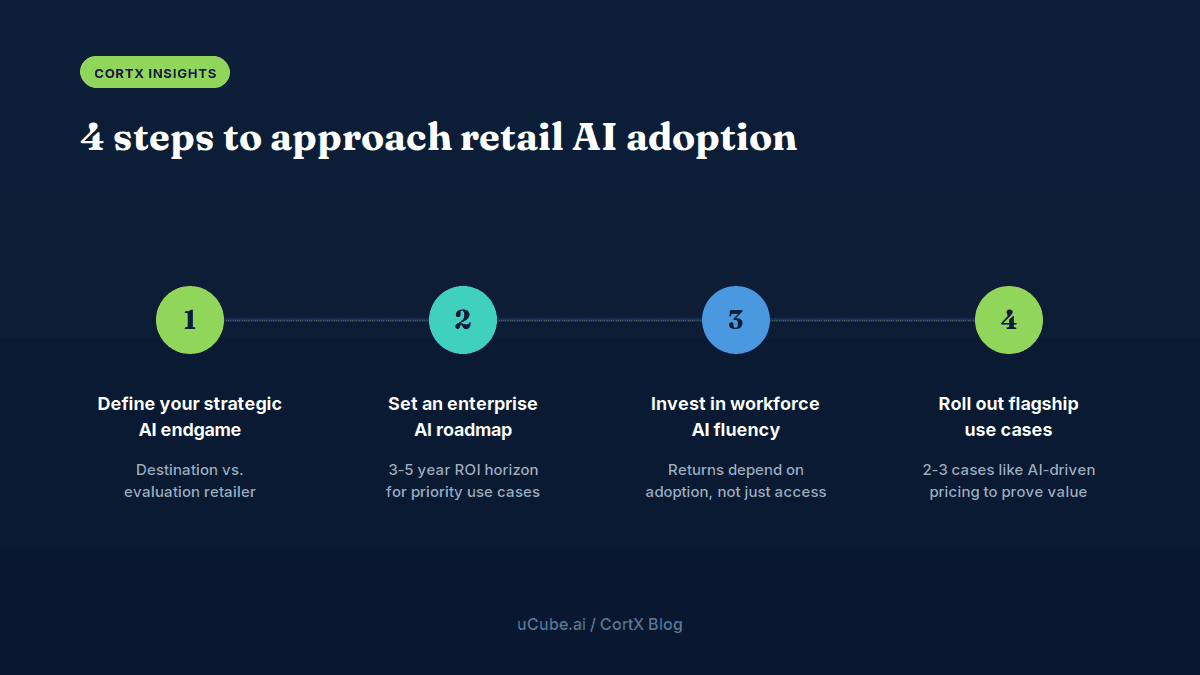
Retailers do not need to adopt AI across every function at once. BCG outlines a clear sequence for 2026 that applies broadly to retailers at any stage of their AI journey.
- Define a strategic AI endgame. Decide which retailer you intend to be. A destination that customers come to directly, or an evaluation retailer that wins through AI recommendations. The answer shapes where the money goes.
- Set an enterprise AI roadmap. Work out which use cases deserve a full workflow redesign. Judge each on productivity or customer outcomes, against a realistic three to five year payback.
- Invest in workforce AI fluency. Provide hands on training and clear role based use cases, since returns depend heavily on adoption, not just access to tools.
- Roll out flagship use cases. Launch two to three flagship use cases, such as AI driven pricing or markdowns, to show early value before scaling further.
What Does the Future of AI in Retail Look Like?
Retail is heading for an operating model where humans and AI work as a team by default. The alternative, bolting tools onto today's roles, is already fading. At destination retailers, merchandising, customer growth, and technology will carry most above-store employee costs. Each of those functions needs deeper AI skills and redrawn responsibilities.
BCG's AI Radar survey covered 2,400 business executives. Four out of five CEOs are more optimistic about AI returns than a year ago. Nearly all expect AI agents to show measurable returns in 2026. Retailers that treat this as an ongoing transformation rather than a one time technology upgrade are best positioned to capture that value.
Key Takeaways
- AI is reshaping how customers discover products, how stores operate, and where retail profit is created, not just automating existing processes.
- BCG sets out two paths: destination retailer and evaluation retailer. Which one you become depends on how far you invest in owning the customer relationship.
- KPMG's global research shows retailers are already using AI for everyday operations like instant stock replenishment and personalized shopping agents.
- AI mature retail companies can see productivity gains of more than 30 percent outside of stores, according to BCG.
- Retailers that invest in workforce AI fluency alongside technology see stronger returns than those that treat AI as a simple tool addition.
Frequently Asked Questions
AI in retail is primarily used for personalized product discovery, demand forecasting, inventory management, dynamic pricing, category management, and increasingly, agentic supply chain automation.
Customers increasingly research and shortlist purchases through AI assistants before reaching a store, shifting the store's role toward providing confidence, service, and fast fulfilment rather than initial product discovery.
A destination retailer is one that customers seek out directly and can retain healthier margins through owned data and personalization, while an evaluation retailer depends on traffic referred by AI platforms and faces greater margin pressure.
AI changes the nature of retail roles rather than eliminating them outright, with BCG noting leaner but more senior above-store teams and store associates shifting toward consultation and service rather than routine tasks.
Agentic AI refers to systems that can take multi step actions with human oversight, such as automatically triggering inventory replenishment within approved parameters, representing a step beyond earlier generations of retail analytics tools.
According to BCG, financial returns usually play out over a three-to-five-year horizon as workflows and systems modernize and organizational adoption grows.
Turn this insight into your next move.
Tell us what you're building and we'll show you where uCube.ai actually fits — no generic demo, just a straight conversation about your data and your goals.