


AI & Data Fundamentals
What Is Enterprise AI Architecture? A Complete Guide
What Is Enterprise AI?
Enterprise AI means running advanced AI across a large company as standard practice. Not a one-off experiment, but part of how the business works. Getting from a working prototype to something reliable in production is the hard part. Scale, performance, data governance, ethics, and compliance all arrive at the same time.
In practice it covers policy, strategy, infrastructure, and technology. All of it has to serve the whole company, not one team. Getting there takes real investment. As AI becomes standard equipment for large businesses, that investment pays for itself.
What Is an Enterprise AI Platform?
An enterprise AI platform is the connected set of technology behind all of this. It lets a company experiment, build, deploy, and run AI at scale. Deep learning models sit at the core of most AI applications. Enterprise AI depends on reusing them across tasks. Training something new for every fresh problem does not scale.
The platform supplies the plumbing to reuse, productionize, and run models company-wide. The goal is a stable, repeatable system that is still flexible enough to improve.
Core Components of AI Architecture
Modern AI architecture is made up of several interlocking pieces that work together rather than in isolation:
- Data management, which ensures models are working from clean, high-quality input
- Machine learning infrastructure, which supports the full model lifecycle from early experimentation through production
- Workload support, spanning batch processing, real-time analytics, and day-to-day ML operations
- Governance and security, which run through every layer rather than being bolted on afterward
Build it in modules. Then the architecture can change over time instead of being rebuilt every time needs shift.
Benefits of Enterprise AI
- Drives innovation. Large enterprises often have hundreds of business teams, and most of them don't have dedicated data science resources. Enterprise-scale AI lets anyone propose, test, and adopt AI in their own workflow. Domain experts who know the business can contribute directly.
- Strengthens governance. Siloed AI development limits visibility and makes it harder for stakeholders to trust the results, especially for anything tied to critical decisions. A proper enterprise approach brings transparency and control. Access to sensitive data is governed to meet the rules. Explainable AI shows teams how a model reached its answer.
- Reduces costs. Careful management of development effort, time, and compute is essential, especially during training. A solid strategy standardizes repetitive engineering work. It also gives every team scalable access to compute, which cuts waste and duplicated effort.
- Increases productivity. Automating routine work frees people for the creative kind. Intelligence built into business software also shortens the gap between stages, from design to delivery. That is where fast returns come from.
Common Use Cases for Enterprise AI
- Research and development. AI can analyze large datasets, forecast trends, and simulate outcomes, cutting the time and resources needed for product development. Pharmaceutical companies, for instance, have used AI-driven discovery platforms to speed up identifying promising drug candidates.
- Asset management. Predictive maintenance models flag equipment that is about to fail and suggest changes that improve efficiency. They also show where every physical asset is and what condition it is in. Medical technology companies have used this kind of approach to meaningfully cut unplanned equipment downtime.
- Customer service. Chatbots and virtual assistants handle much of the routine inbound traffic on their own. Real-time analysis of customer data makes recommendations and support more personal. Some telecom providers have used AI this way to help human agents work faster and serve customers better.
Key Technology Considerations
- Data management. AI projects need secure, efficient access to company data. That means solid pipelines, streaming or batch, and a catalog so teams can find the datasets. It also means central governance that controls access without becoming a bottleneck.
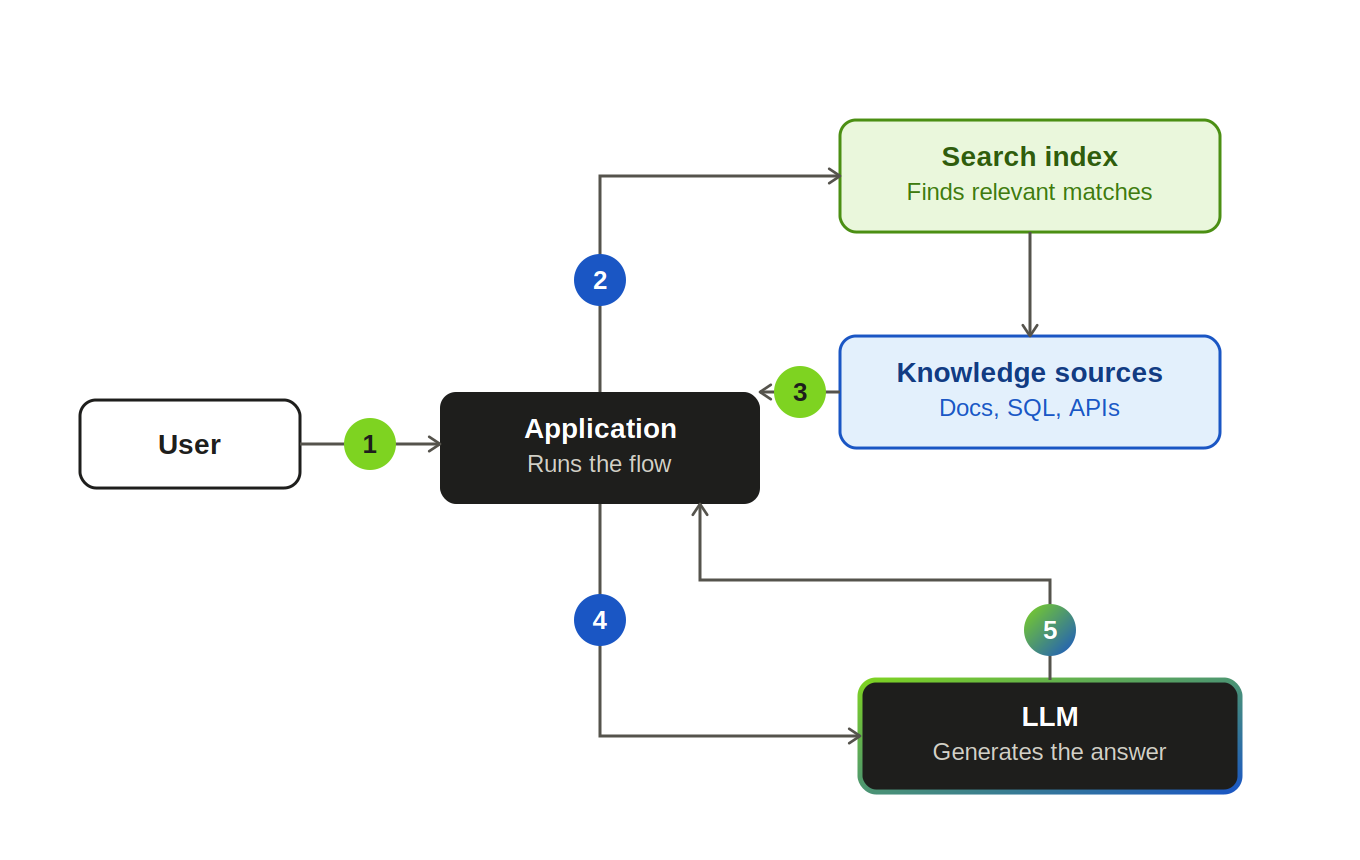
- Model training infrastructure. Organizations need a centralized way to build and train both new and existing models. Feature engineering turns raw data into usable variables, and it is central to this. A shared feature store lets teams reuse that work instead of repeating it. Support for retrieval-augmented generation matters here too. RAG adapts an existing LLM to your own internal knowledge without retraining the model.
- Central model registry. A model registry acts as an enterprise-wide catalog for every model built across different teams. Versioning is part of it. Teams can track how a model changed, compare versions, and confirm production is running the best one. Registries also usually hold metadata like training data, parameters, performance metrics, and usage rights, which streamlines governance and auditability.
- Model deployment. MLOps and LLMOps bring DevOps discipline to AI work. Data preparation, training, testing, and deployment get automated, which removes manual error. Building proper CI/CD pipelines for models lets teams iterate quickly based on real feedback rather than being stuck with long release cycles.
- Model monitoring. Because models can drift, hallucinate, or simply become less relevant as data and context change, ongoing monitoring is essential. Human-in-the-loop review means domain experts check output for accuracy on a schedule. Add live feedback from users, and the model stays aligned with what people need.
Architectural Design Patterns
A handful of patterns recur in enterprise AI architecture. Knowing when to reach for each one avoids the usual pitfalls:
- Lakehouse architecture combines the flexibility of a data lake with the structure of a warehouse. That gives you one place to manage varied data for analytics and AI.
- Feature stores provide one reusable set of model inputs for every team. That removes duplicated feature engineering and keeps training and production consistent.
- Microservices break AI features into parts you can deploy on their own. You can then scale one part of a system without scaling all of it.
These patterns aren't mutually exclusive. Most mature architectures combine several of them depending on the specific problem being solved.
Governance, Compliance, and Security
Governance is really the backbone of any responsible AI architecture. That means clear policies for data quality, access control, auditing, and compliance. It also means knowing how data moves through the system and who can touch it. Fragmented data landscapes make this harder, which is why unified platforms with consistent controls across different deployment styles matter so much.
In a regulated industry such as healthcare or financial services, compliance belongs in the architecture from day one. Retrofitting it later rarely works. That includes managing sensitive data carefully, maintaining thorough audit trails, and making sure decisions can be explained when required.
Security needs the same layered treatment. Access controls, encryption, network isolation, and audit logging belong at every stage, from storage through model serving. Review that posture regularly as new threats appear.
Scaling and Real-Time Considerations
As data volumes and user demand grow, architecture has to scale without falling over. Design compute, storage, and networking for both batch and real-time work. Then add automation and careful resource allocation, or costs climb with usage.
Real-time use cases add another layer. Once an application has to answer live input without noticeable delay, you need low-latency serving, automatic failover, and request routing across model versions.
Frequently Asked Questions
A standard AI project might solve one specific problem for one team. Enterprise AI is built to operate across an entire organization, which means it has to address shared infrastructure, governance, security, and compliance requirements that a single-team project usually doesn't need to worry about.
A feature store is a centralized system for storing and reusing the engineered features that feed machine learning models. It lets different teams share consistent, reusable inputs instead of duplicating feature engineering work for every new project.
Models can drift, hallucinate, or become less accurate as the underlying data and business context change over time. Ongoing monitoring, combined with human review and real-time user feedback, helps catch these issues before they affect business decisions.
Governance defines who can access which data, how model decisions can be audited, and how compliance requirements get met. Building governance into the architecture from the start, rather than adding it after deployment, tends to be far less costly and disruptive.


Turn this insight into your next move.
Tell us what you're building and we'll show you where uCube.ai actually fits — no generic demo, just a straight conversation about your data and your goals.