

AI & Data Fundamentals
What Is Enterprise Integration and Why Does It Matter? A Complete Guide
What Is Enterprise Integration?
As companies adopt more cloud services, specialized applications, and digital tools, their technology environments get more complex by the year. Systems that once ran on their own now have to work together. That is what keeps processes, decisions, and day-to-day operations consistent across the business.
Enterprise integration is the set of technologies, platforms, and practices used to coordinate how systems across a company interact with one another. It governs how applications exchange information and how data moves between environments. It also lets one process span several systems and still work the same way everywhere.
Integration matters because most companies run on a patchwork of systems. Finance, supply chain, HR, and customer engagement each have their own. Around them sit industry tools, partner platforms, and cloud services, all added at different times for different reasons. Without a coordinated way to connect them, gaps appear. Data drifts out of sync. Processes break at handoffs. Teams fall back on manual workarounds to bridge the difference.
A mature integration approach favors standardization and reuse over one-off connections. Rather than build a bespoke integration for every new requirement, companies settle on shared patterns. Those patterns are APIs, event-driven messaging, and reusable integration flows. Together they cut duplication, improve governance, and make systems easier to change or replace later.
Integration also underpins most modernization efforts. Automation, analytics, and AI all raise the stakes. Each one needs a reliable way to move data and coordinate actions across applications. Integration provides that foundation, letting systems interact within clear boundaries while staying supported by monitoring, lifecycle management, and governance.
Why Enterprise Integration Matters
Modern companies depend on a growing number of systems to run day-to-day operations. Each one often solves its own problem well. Together they create a fragmented landscape, where information stays siloed and processes stall at system boundaries.
Without a coordinated integration strategy, the symptoms are familiar. Information arrives late, data disagrees, handoffs go manual, and visibility across the business stays thin. All of it slows execution, raises risk, and makes change harder.
Integration also plays a central role in modernization. Automation, analytics, and AI-enabled use cases all depend on systems that can connect reliably and data that moves under proper governance. By standardizing how systems talk to each other, integration lets companies scale these initiatives while keeping control, security, and operational stability intact.
Types of Enterprise Integration
Enterprise integration covers several approaches to connecting systems, data, and processes. Most companies use a combination, depending on their landscape and goals:
- Application integration — connects applications so they can share data and coordinate actions in real time, supporting workflows that span multiple systems.
- Data integration — discovers, retrieves, and compiles data from scattered sources into a single, structured view for both operational and analytical use.
- Cloud integration — connects public and private cloud environments into one cohesive infrastructure spanning hybrid landscapes.
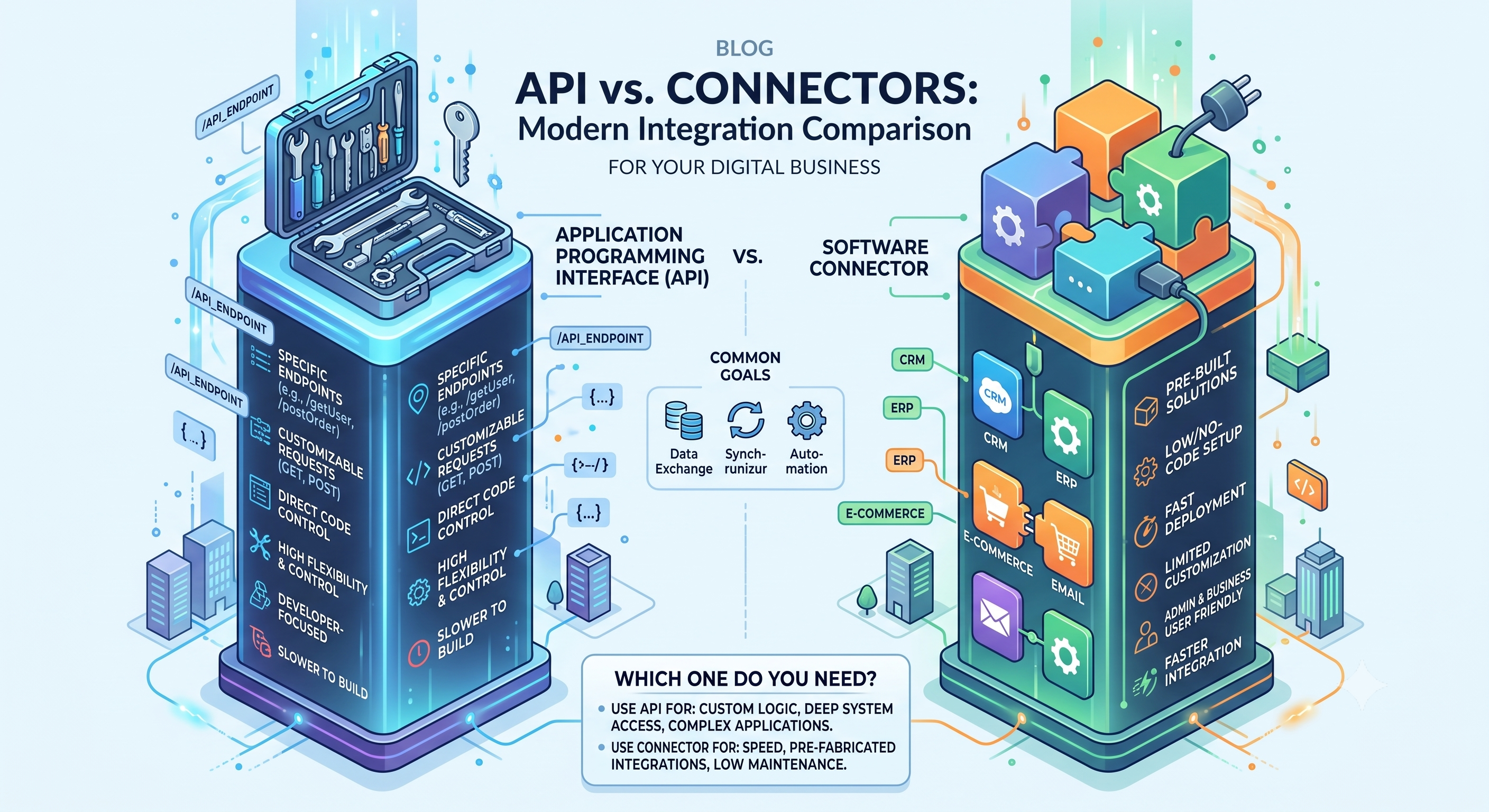
- API integration — connects two or more applications through APIs so they can exchange data and support shared business processes.
- Platform integration — uses one toolset to build, run, monitor, and govern integration flows across applications and data sources. Many companies buy this as integration platform as a service (iPaaS).
- Process integration — orchestrates workflows that span multiple applications and systems, improving consistency across end-to-end processes.
- Device integration — connects physical devices so they can communicate and interoperate with applications and services.
Enterprise Integration Platforms and Technologies
Several kinds of platform support how systems connect and run at scale. Most companies lean on a mix, depending on their needs:
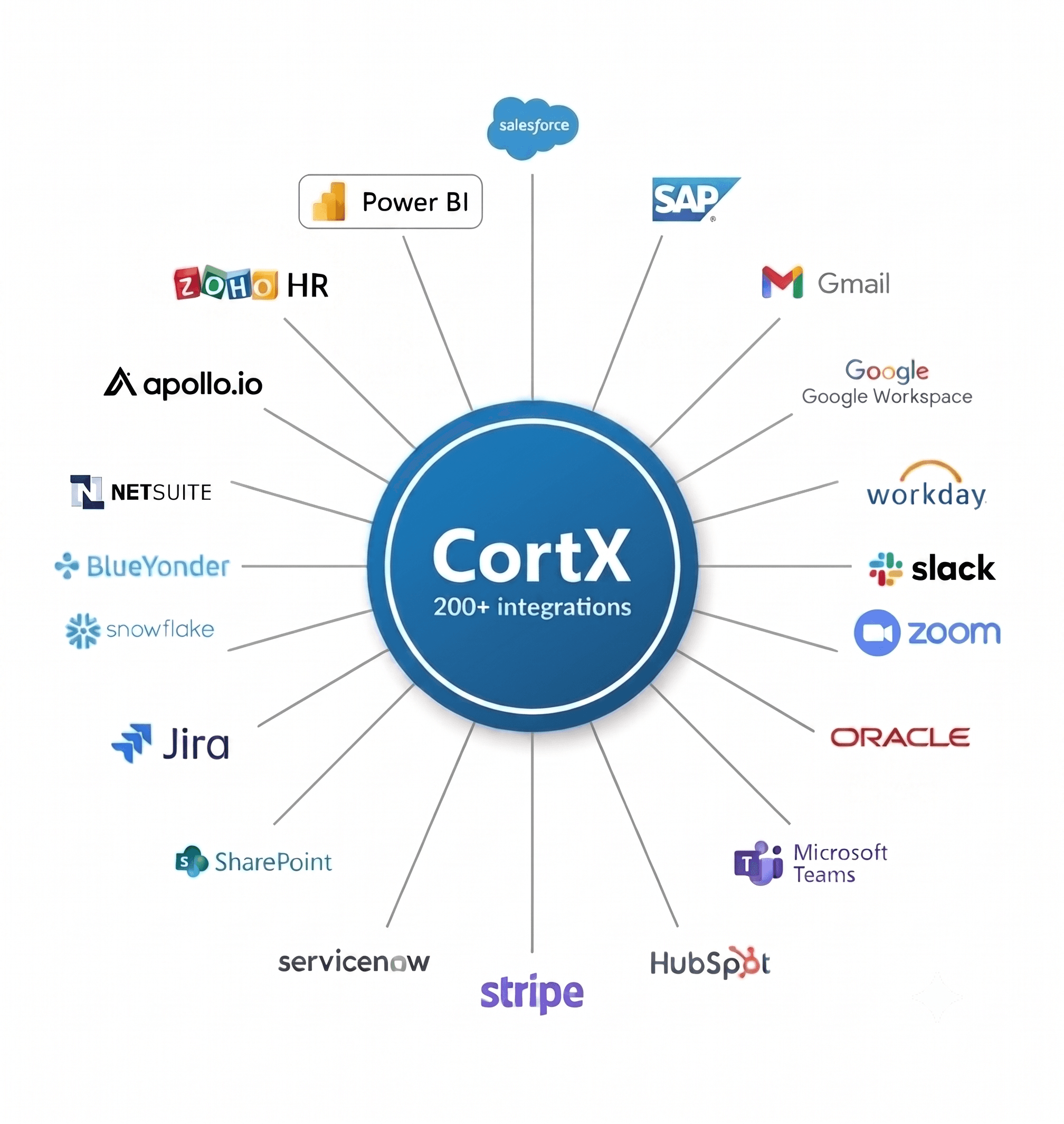
- Integration platforms (iPaaS) — centralized tools for designing, running, monitoring, and governing integrations across cloud and on-premises environments.
- APIs and API management — standardized interfaces that let applications exchange data securely and consistently.
- Messaging and event-based integration — real-time and asynchronous communication between systems using events and message queues.
- Data integration technologies — tools that move, synchronize, and harmonize data across systems for operational and analytical use.
- B2B and EDI integration — structured data exchange and process coordination with external partners, suppliers, and customers.
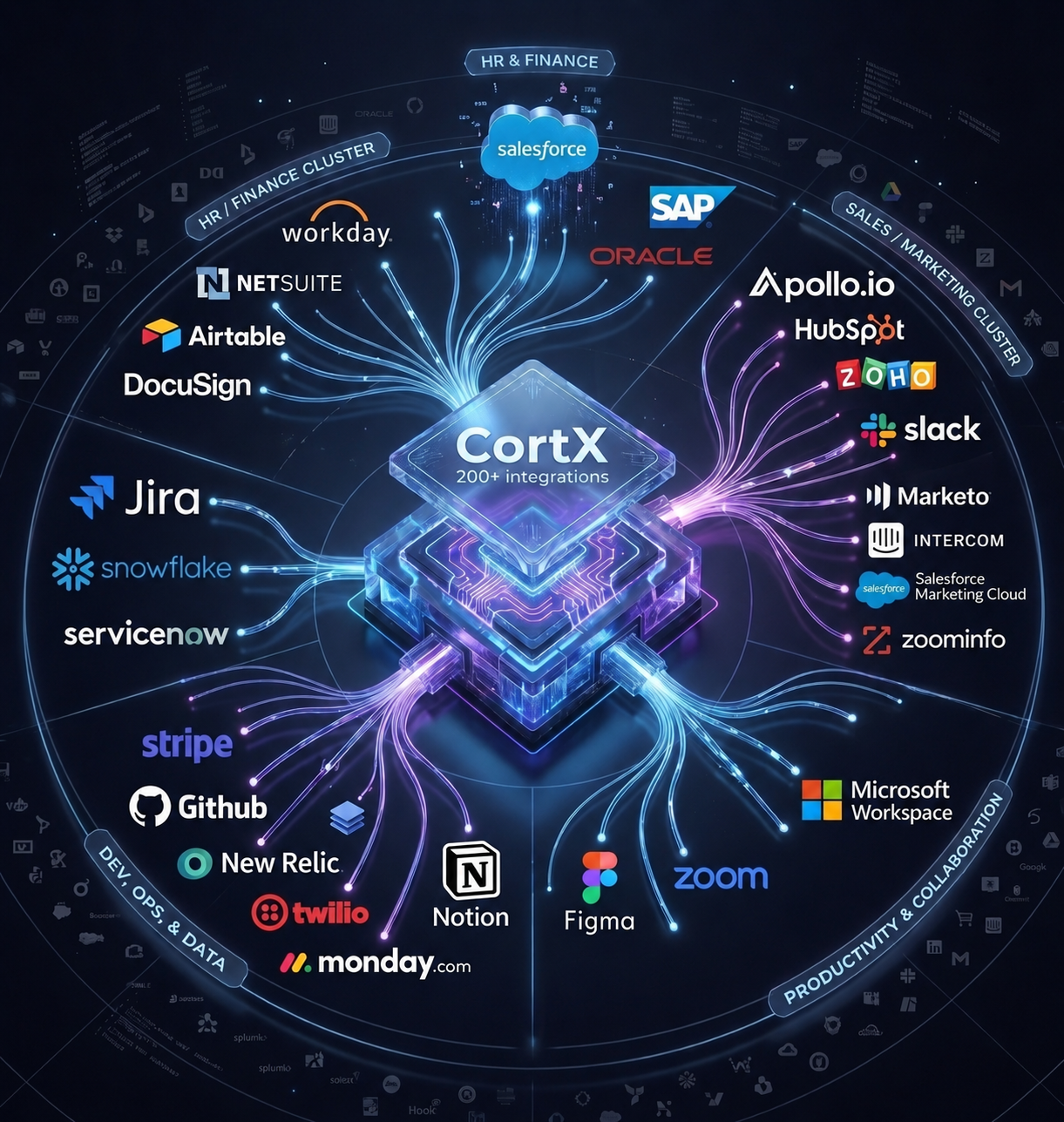
- Integration adapters and connectors — prebuilt connectivity to common applications, services, and protocols.
- Cloud integration technologies — connections between cloud-based applications and on-premises systems or other clouds.
- Monitoring and management tools — visibility, error handling, and operational governance across integrations.
How Enterprise Integration Enables Business Automation
Automation only works if the underlying systems can actually talk to each other reliably. Integration provides that technical foundation, letting automated processes span applications, teams, and organizational boundaries.
Integration coordinates how data and events move between systems. That is what makes order fulfillment, invoicing, supply chain updates, and employee onboarding automatic. It also helps companies scale automation safely, maintaining visibility and control as automated processes grow in scope.
How Enterprise Integration Improves Decision-Making and Analytics
Good decisions depend on timely access to unified data. In disconnected environments, information is often delayed, duplicated, or inconsistent across systems, which undermines confidence in the numbers.
Integration improves analytics and decision-making by enabling more timely data exchange, reducing fragmentation, and keeping shared business context consistent across applications. Real-time data integration lets companies base decisions on a clearer, more current picture of what's actually happening operationally.
Enterprise Integration and Agentic AI
Agentic AI describes systems that act as agents inside defined workflows. They watch events, pull data, and work with applications to carry out complex processes. These scenarios depend on coordinated system interactions, not isolated tools or standalone models.
Enterprise integration provides the architectural foundation that makes agentic AI possible at an enterprise scale. Integration is what lets those agents work across several applications at once. Standard APIs, event-driven messaging, and governed access keep them inside your business rules and controls.
As companies try agentic AI, integration does two jobs. First, it makes sure agents reach the right data, react to real-time events, and coordinate actions across systems. Second, it carries the security, lifecycle management, and governance that responsible agentic AI requires.
Security, Lifecycle, and Governance
As integration landscapes grow, security and governance become increasingly important. Enterprise integration platforms usually support this through:
- Secure data exchange and controlled access to systems
- Centralized monitoring and error handling across integrations
- Versioning and lifecycle management for APIs, events, and integration flows
- Policy-based governance to support compliance and operational boundaries
These capabilities help ensure automated and AI-enabled interactions stay within the guardrails a company has established.
Best Practices in Enterprise Integration
Organizations that treat integration as a long-term capability, rather than a series of disconnected projects, tend to see more consistent, sustainable results. A few practices come up again and again:
- Design for reuse and scalability. Build integrations that can serve multiple use cases instead of one-off, single-purpose connections.
- Avoid tightly coupled, point-to-point integrations. Direct system-to-system connections are quick to build. They also turn fragile as the landscape changes. Loosely coupled patterns make systems easier to swap out later.
- Establish clear standards. Consistent conventions for APIs, data formats, events, error handling, and versioning help teams build integrations more efficiently and reduce inconsistency.
- Treat integrations as managed assets. Assign clear ownership, maintain documentation, and actively manage lifecycle changes rather than letting integrations become untracked technical debt.
- Govern without blocking delivery. Apply governance that supports security and compliance while still letting teams move at a reasonable pace, guidelines rather than rigid roadblocks.
- Monitor and improve continuously. Track performance, failures, and usage patterns so issues get caught early and integration approaches can evolve alongside the business.
Building an Integration Centre of Excellence
An integration centre of excellence (ICoE) is a cross-functional capability that helps companies manage integration consistently as they scale. An effective ICoE is not a single central delivery team. It supplies the guidance, standards, and shared services that let other teams build and run integrations themselves.
An ICoE usually pulls together expertise from enterprise architecture, integration specialists, security, operations, and business stakeholders, balancing flexibility with control. Its core responsibilities usually include:
- Defining integration standards and architectural patterns
- Providing shared platforms, tools, and services
- Supporting reuse and faster delivery of new integrations
- Governing security, quality, and lifecycle management
- Enabling collaboration between IT and business teams
- Supporting automation and AI-enabled scenarios as they emerge
An ICoE also changes over time. Early on it sets basic standards. Later it tunes performance and supports more advanced automation.
Measuring Integration Maturity
Enterprise integration is an evolving capability, and companies often track a few key indicators to gauge how mature their approach is:
- Reuse of integration assets, APIs, and event definitions
- Time required to design, build, and deploy new integrations
- Reliability and error rates in production
- Ability to adapt integrations to new business or regulatory requirements
Tracking these over time helps keep an integration strategy aligned with where the business is actually headed.
Frequently Asked Questions
API integration is one specific method within the broader field of enterprise integration, focused on connecting applications through standardized interfaces. Enterprise integration is the umbrella discipline covering multiple approaches, including data, cloud, process, and device integration, alongside APIs.
AI systems, especially agentic AI that needs to observe events and take action across multiple applications, depend on reliable, governed connections between systems. Enterprise integration provides that foundation, letting AI agents access the right data and coordinate actions safely within established business rules.
It's a cross-functional team that sets standards, provides shared tools, and governs integration practices across a company, enabling different teams to build integrations consistently rather than everyone reinventing their own approach.
Without one, companies usually end up with inconsistent data, manual workarounds at process handoffs, limited visibility across operations, and a harder time scaling automation or analytics initiatives reliably.
Turn this insight into your next move.
Tell us what you're building and we'll show you where uCube.ai actually fits — no generic demo, just a straight conversation about your data and your goals.