
AI & Data Fundamentals
What Is a Knowledge Graph? A Complete Guide
What Is a Knowledge Graph?
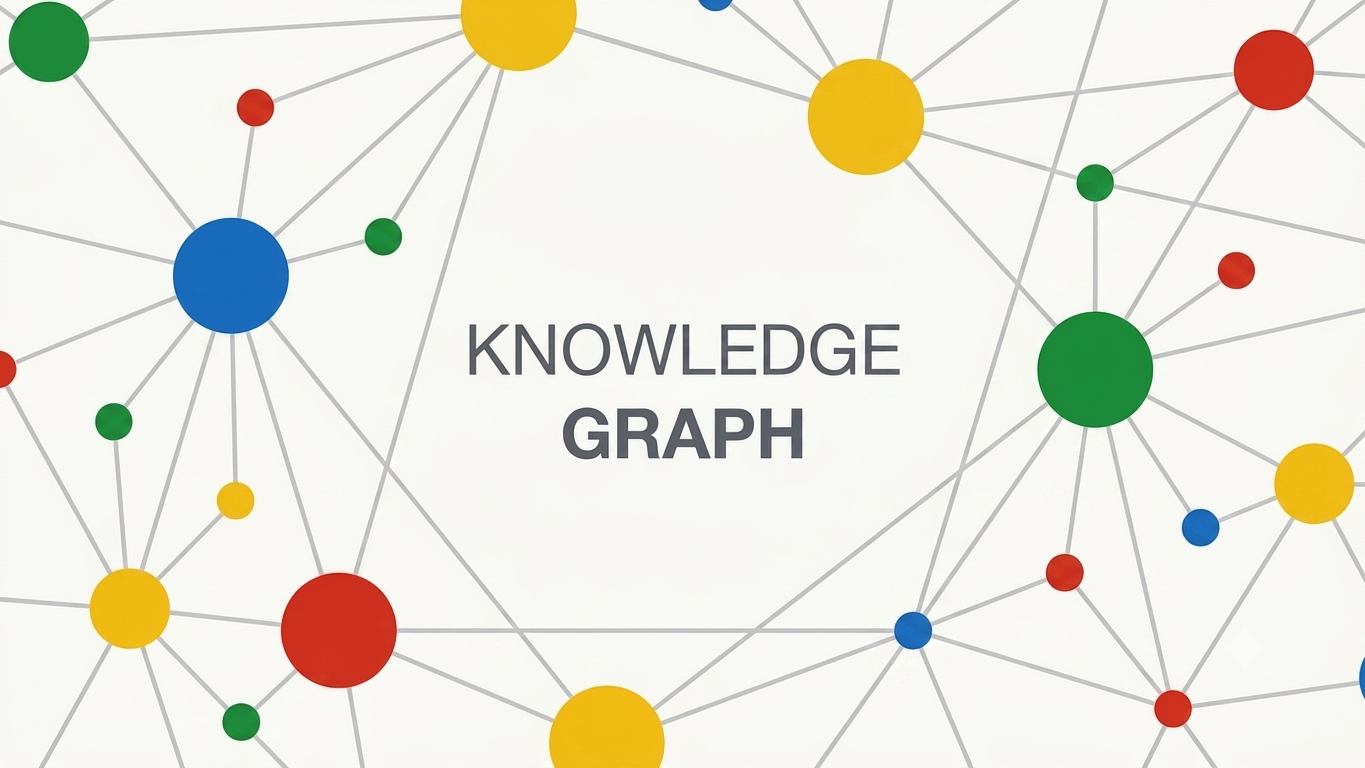
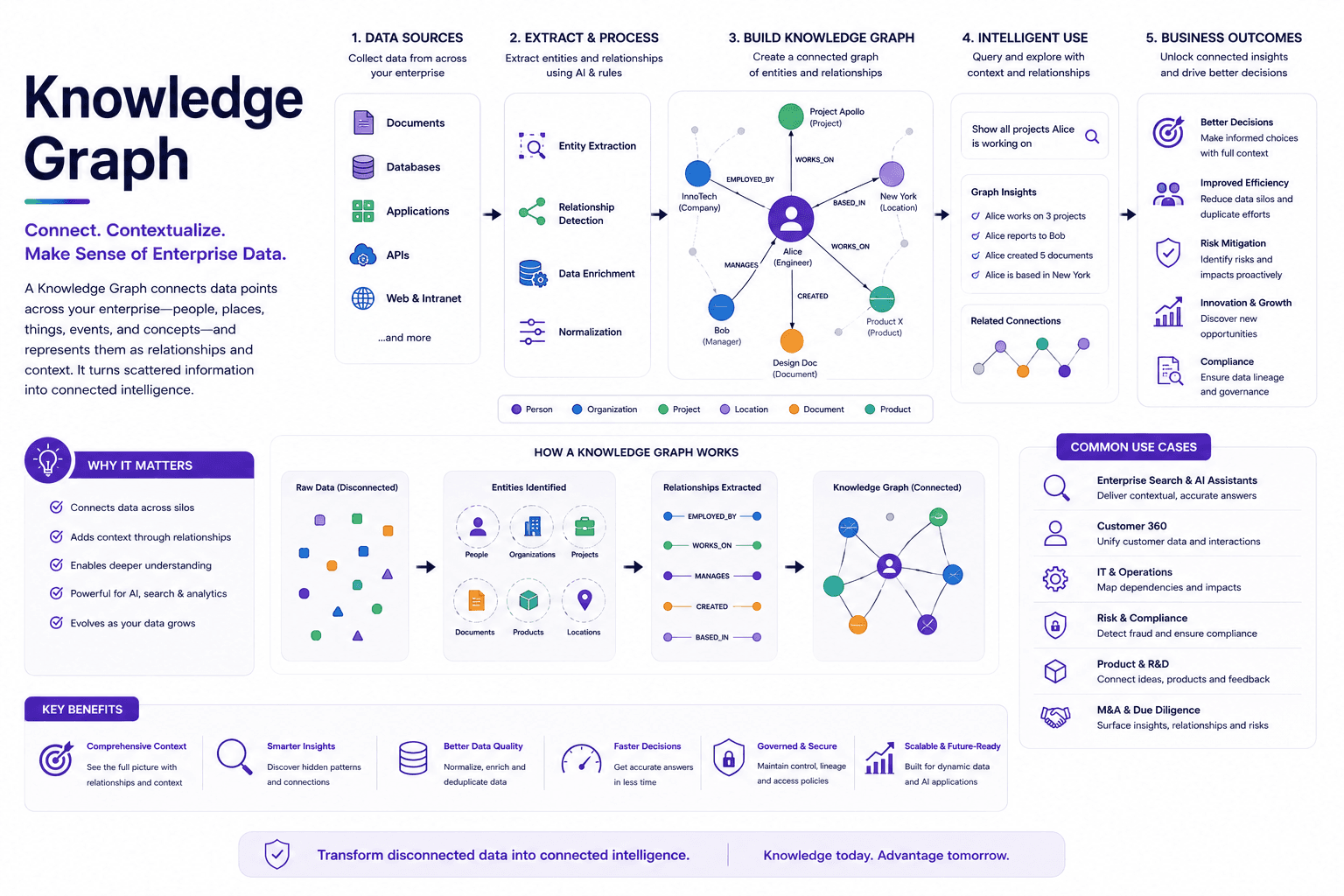
A knowledge graph represents data as an interconnected network rather than isolated tables or documents, turning raw information into contextual knowledge by preserving how different pieces of data actually relate to one another across sources and formats.
At the core of every knowledge graph sits an ontology: a structured framework that defines the concepts, rules, and relationships within a domain through a shared, consistent vocabulary. That shared vocabulary is what makes the resulting knowledge consistent, accessible, and easy to plug into other systems and applications.
Knowledge graphs also aren't static. They evolve continuously as new information comes in, so an organization's knowledge layer stays current rather than going stale the moment it's built. For enterprises, the payoff is what's often called a data fabric: a flexible, machine-readable layer spanning the entire data estate that unlocks value from information that used to sit siloed and disconnected.
The Building Blocks of a Knowledge Graph
Every knowledge graph is built from three components working together:
- Nodes (entities). The things that matter to the business, customers, products, suppliers, assets, or events. Each node stands in for a real-world object or concept.
- Attributes. The properties that describe each entity in more depth, like a customer's location, a product's category, or an asset's current status.
- Relationships. The connections between entities, which are what turn a set of disconnected data points into something you can actually act on.
Put together, these three elements create a connected, queryable map of an organization's knowledge, one that lets AI and analytics tools reason across linked data with far more accuracy and confidence than working from disconnected sources ever could.
How Knowledge Graphs Power AI and Enterprise Intelligence
Improving AI Accuracy With Context
A generative AI model is only as reliable as the context it's given. Without grounding, an LLM can produce answers that sound convincing but have no real connection to an organization's actual data. Knowledge graphs solve this by describing and linking enterprise data in a structured way, giving the model the semantic foundation it needs to reason correctly, cut down on hallucinations, and trace any answer back to a verified source. This is what allows AI agents to move past simple pattern matching into decisions that are genuinely grounded in real information.
Enabling Graph RAG
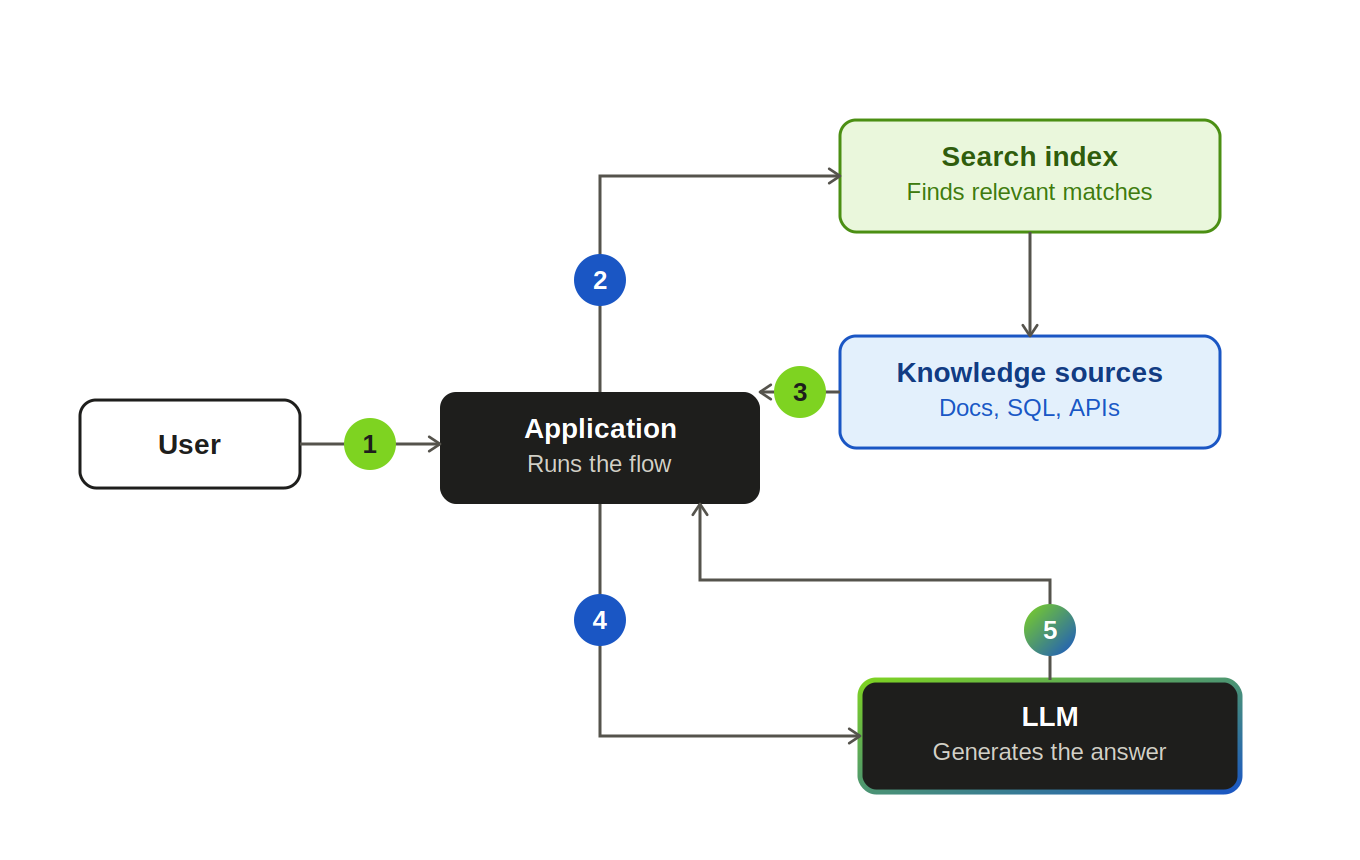
Standard retrieval-augmented generation limits a model's frame of reference to vetted, real information. Graph RAG builds on that by grounding responses in the rich, connected context of a knowledge graph rather than isolated documents, which further reduces hallucinations, sharpens precision, and works across both structured and unstructured data at once.
A well-implemented knowledge graph lets AI systems:
- Explain their answers and cite the sources behind them, which builds trust in AI-driven decisions
- Stay current by keeping the model aligned with the latest enterprise data
- Produce clear, actionable output that non-technical business users can actually work with
Connecting Data Across the Enterprise
Most organizations aren't short on data, they're short on connections between it. Knowledge graphs solve that fragmentation by giving every data asset a shared semantic model, pulling structured and unstructured sources together into one unified, queryable graph. The result is a flexible data layer that eliminates silos, supports self-service access, and makes sure every AI tool, analyst, and decision-maker is working from the same connected version of reality.
Common Challenges With Complex Enterprise Data
Organizations trying to scale data intelligence without a knowledge graph tend to run into the same recurring problems:
- Fragmented systems. Most data platforms store information without actually connecting it or understanding how pieces relate, so cross-domain questions can take weeks of custom engineering to answer, if they get answered at all.
- Agents that hallucinate. Without a shared semantic layer, AI agents are effectively blind outside their own narrow domain, which leads to contradictions and made-up answers whenever a question spans more than one system.
- Pilots that stall at scale. Graph database proofs of concept often succeed, then hit a ceiling, the same tool that worked for a small pilot can't handle enterprise-scale demands, and teams end up locked into something they've outgrown.
- AI that informs but can't act. When AI can only see insights within a single domain, it stays limited to reporting rather than genuinely reasoning and acting across domains, which is what real agentic AI requires.
- Fragile ETL pipelines. Traditional ETL-to-graph approaches hold up fine for a single use case, but at enterprise scale every new data source means another custom pipeline, and every schema change risks breaking what's already built.
- Domain expertise stuck outside the data. A lot of critical business logic and semantic relationships live only in subject-matter experts' heads rather than in the data layer itself, and encoding that knowledge as a formal, queryable ontology is what makes it usable across every agent and system.
Frequently Asked Questions
A traditional database stores data in tables optimized for lookups, but it doesn't inherently capture how different pieces of data relate to each other. A knowledge graph makes those relationships a first-class part of the structure, enabling reasoning across connections rather than just retrieval of isolated records.
By grounding a model's responses in verified, interconnected enterprise data rather than relying purely on patterns learned during training, a knowledge graph gives the model a factual, traceable basis for its answers, and even lets it cite the specific source behind a given response.
Graph RAG is an extension of standard retrieval-augmented generation that grounds an AI model's responses in the structured relationships of a knowledge graph instead of isolated documents, improving accuracy across both structured and unstructured data sources.
Many graph initiatives are built on tools chosen for a small, contained pilot. Those same tools often can't handle the cross-domain complexity and volume of enterprise-wide deployment, which causes projects to stall once they move past proof of concept.
Turn this insight into your next move.
Tell us what you're building and we'll show you where uCube.ai actually fits — no generic demo, just a straight conversation about your data and your goals.