

AI & Data Fundamentals
What Is Semantic Search? A Complete Guide
What Is Semantic Search?
Semantic search is a search technology that interprets what a query actually means, rather than just matching the literal words in it. Instead of scanning for exact word matches, it returns content that aligns with the meaning behind what someone typed, taking into account both their intent and the surrounding context.
At its core, semantic search is a set of capabilities built to understand a searcher's intent within the context they're searching in. The goal is to interpret natural language more accurately, using machine learning and AI to connect what someone is really asking for with content that matches that meaning, not just the specific words used.
How Does Semantic Search Work?
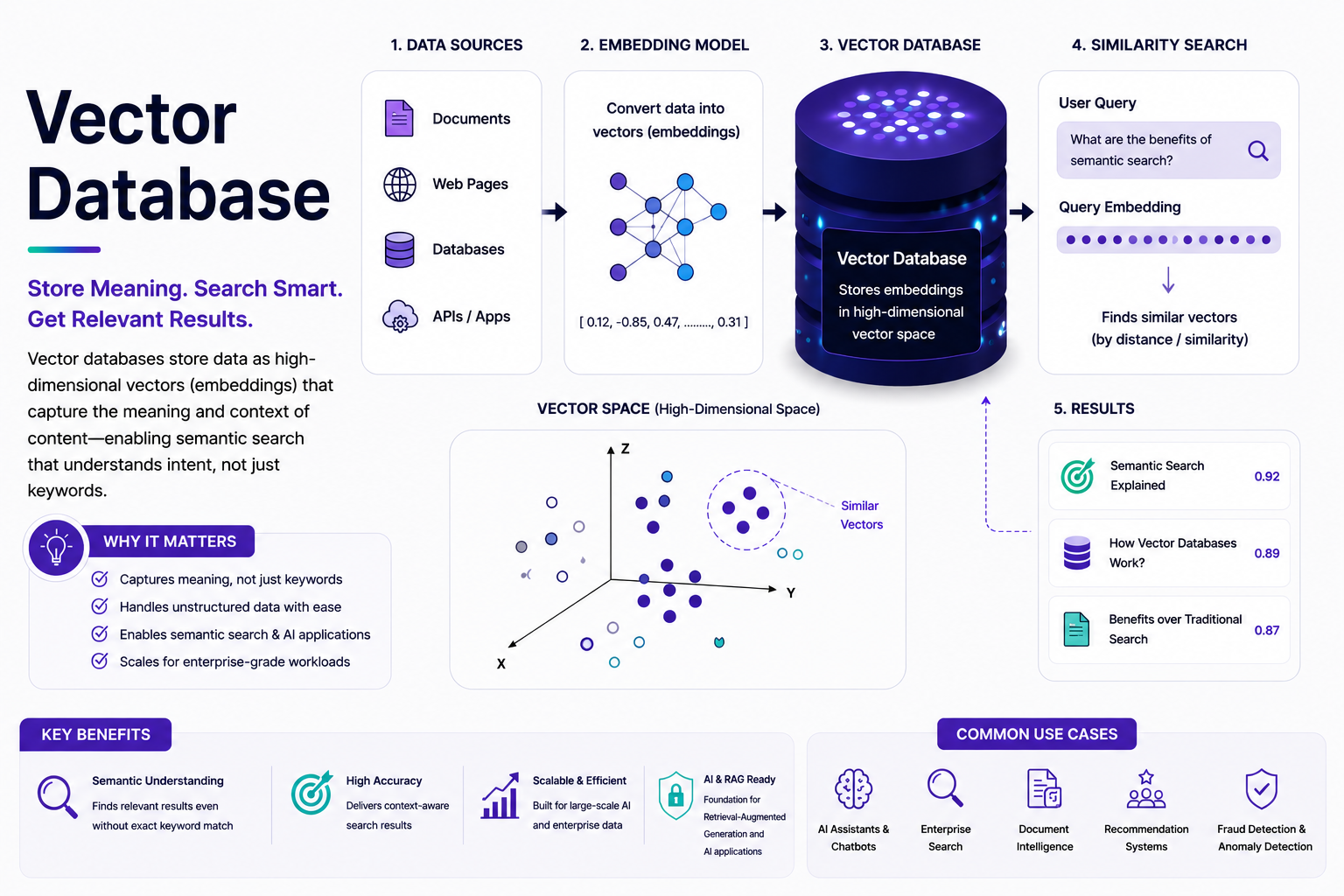
Semantic search runs on vector search, which is what lets it rank results by contextual and intent relevance rather than by literal keyword overlap. Vector search encodes information into numerical representations, called vectors, and then compares those vectors to figure out which pieces of content are conceptually closest to each other.
The process happens in three stages:
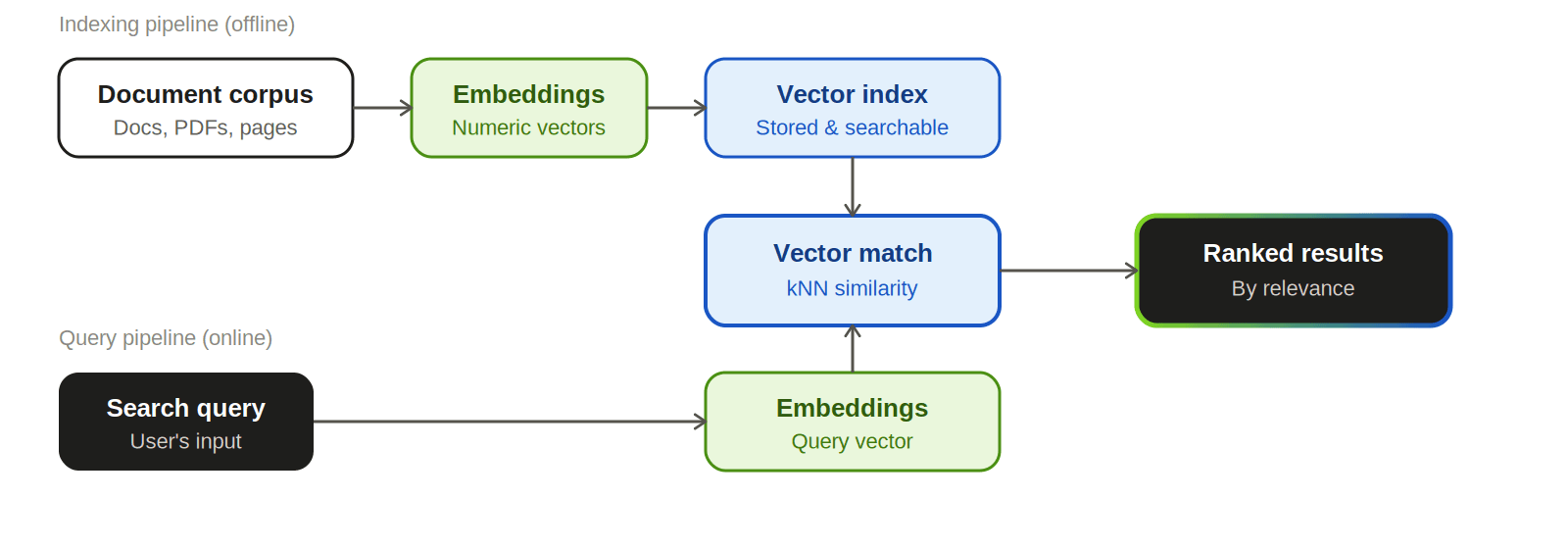
- Turning the query into embeddings. When someone submits a search, the engine converts that query into embeddings, numerical representations that capture the data and its related context, and stores them as vectors.
- Matching vectors. A k-nearest neighbor (kNN) algorithm compares the query's vector against the vectors of existing documents to find the closest conceptual matches.
- Ranking by relevance. The engine then generates and ranks results based on how conceptually relevant they are to the original query, not just how many words overlap.
The Role of Context
Context in semantic search can include a searcher's location, the surrounding words in their query, or even their past search history. The system learns how a word is typically used across huge volumes of examples, which lets it recognize which other words or phrases carry a similar meaning in a given setting.
A simple example: a search for "football" means something different in the United States than it does in the United Kingdom. Semantic search can pick up on that distinction based on where the search is coming from.
The Role of Searcher Intent
Ultimately, semantic search exists to make the overall experience better by figuring out what a person actually needs, whether that's general information, a specific purchase, or something else entirely. Based on the query and its surrounding context, the engine ranks results in the order most likely to satisfy that intent, and this can be further refined with settings like surfacing higher-rated products before lower-rated ones.
Semantic Search vs. Keyword Search
Keyword search matches words to other words, synonyms, or closely related terms, often relying on tools like query expansion, typo tolerance, and text normalization to bridge small gaps. Semantic search instead matches the underlying meaning of a query, and it can return highly relevant results even when there's no direct word overlap at all, because it's built around vector search rather than literal text matching.
A clean example of the difference is "chocolate milk" versus "milk chocolate." Both phrases contain the exact same two words, but the order changes the meaning entirely, one is a chocolate-flavored drink, the other is a variety of chocolate. A keyword-based system can easily miss this distinction; semantic search is built to catch it.
Why Semantic Search Matters
Because it's powered by vector search, semantic search widens what counts as a relevant result. It creates a more intuitive experience where the context and intent behind a query, not just its literal wording, determine what comes back.
Semantic search systems also keep improving over time, learning from real usage signals like conversion rates and bounce rates, which helps drive better user satisfaction the longer the system runs.
Examples of Semantic Search in Practice
- Personalization. A search engine can use someone's past searches and interactions to shape both the relevance and the ranking of new results, for instance, showing local businesses when someone searches "restaurants" nearby.
- Comparison and purchase intent. A query like "Creuset vs. Staub dutch ovens" gets treated as a comparison request, while something like "best Staub deals" is recognized as purchase intent, and results are shaped accordingly.
- Predictive text. As someone types a query, semantic search can auto-complete it and suggest relevant terms based on context, common searches, and prior search history.
Benefits of Semantic Search
- Easier for customers to use. People don't always remember exact product names or the right technical terms. Semantic search lets someone type a vague or descriptive query and still land on the specific result they meant, like finding a song by searching the lyrics they remember instead of the title. Because it factors in intent and context, the whole experience feels closer to a natural conversation than a literal lookup.
- Concepts hold up better than keywords. By matching concepts instead of exact words, semantic search delivers more accurate results. Through vector embeddings, a word like "car" doesn't just match "car" or "cars," it also connects to related concepts like "driver," "insurance," "tires," "electric," and "hybrid," because those ideas sit close to "car" in the underlying vector space. That's a meaningful step beyond simple keyword-token matching.
- Better outcomes for the business. Because semantic search picks up on informational, transactional, navigational, or commercial intent, it helps a search engine meet customer needs more precisely, which in turn strengthens the relationship between a business and its customers.
Frequently Asked Questions
Keyword search matches literal words, synonyms, and closely related terms. Semantic search instead matches the meaning behind a query using vector representations, so it can return relevant results even without direct word overlap.
Semantic search is powered by vector search, which converts queries and documents into numerical embeddings and uses algorithms like k-nearest neighbor (kNN) to find the closest conceptual matches.
Yes. Semantic search interprets whether a query is informational, transactional, navigational, or commercial, and ranks results based on that intent alongside the query's context.
Yes. Context such as a searcher's geographic location or past search behavior can shape which results are considered most relevant, since the same word or phrase can carry different meanings in different settings.
Turn this insight into your next move.
Tell us what you're building and we'll show you where uCube.ai actually fits — no generic demo, just a straight conversation about your data and your goals.